
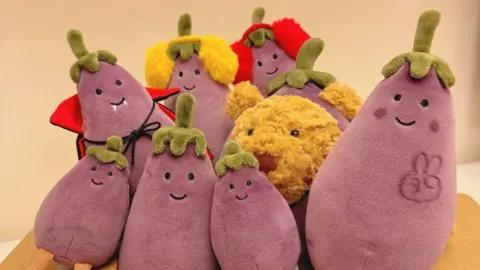
A woman named Stella acquired her first Jellycat cuddly companion amid a period of unemployment during the global health crisis. Inspired by an acquaintance's fondness for the UK-created creatures, her interest was truly sparked when she saw a unique gingerbread cottage design on a major Chinese social media app.
While The Christmas holiday isn't traditionally observed across China, acting more as a commercial event rather than a cultural tradition, the imagery of gingerbread houses resonated to Stella. "The festival doesn't mean much to me... But I always like the sight of those sweet houses," she explains. This led her to request a friend in Guangzhou to purchase the item on her behalf.
That purchase took place in 2021, coinciding with the brand was on the cusp of achieving massive popularity in China and internationally. "Everyone felt anxious, and nobody knew what exactly would happen," recalls Stella, who picked up a habit of petting and squeezing her soft toys for comfort during a difficult period. Living in Beijing, a city with some of the strictest lockdowns globally, she passed a great deal of time indoors.
Now aged 32 with a new job in sales manager in the tourism industry, Stella still expand her assortment. It has reached approximately 120 items, with a total an investment of about 36,000 yuan. "At my age, you have many things you can't share with others... and the troubles we encounter are a lot more complex than before," she notes with a sigh. "These soft toys assist me in managing my emotions."
Initially marketed for children, these squishy creatures have evolved into a global phenomenon, particularly within China where an somewhat disillusioned youth demographic is turning to them as a source of emotional support.
Understanding the Kidults
Her gingerbread cottage plushie is part of their "Amuseable" series, a set of characters featuring small expressions based on commonplace inanimate objects, from toilet rolls to hard-boiled eggs. These plushies have become the "standout success" that "appeal to a wide younger adult demographic" around the world, according to market observers.
Their growing appeal "could have something to do with a desire to feel a sense of connection," suggest experts. It is hard to say for sure whether the launch of the iconic Amuseable line back in 2018 was a deliberate move to engage the adult market, toy manufacturers increasingly must find alternative audiences amid declining birth rates in many parts of the world.
Jellycat entered the Chinese market as early as 2015. By laying significant "foundation", the toy maker was well-positioned to tap into "the tone during Covid"—when individuals looked for comfort during widespread uncertainty—capitalizing on this momentum in the country, as explained by industry experts.
Its fame was further boosted through creative temporary events. These in-store activations often featured a selection of limited-edition "culinary" products. Numerous fans record their experience interacting and share the clips online.
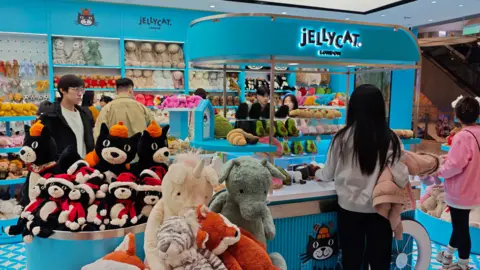
Adaptation to local tastes has also been an essential strategy. For instance, customers were able to buy plush interpretations of classic British fare such as fish, chips and mushy peas at a pop-up in London. Conversely, items like teapot and teacup plushies were sold at special stores in Beijing and Shanghai last year.
In 2024, the UK-based firm's sales is said to have rose by two-thirds to reach a substantial figure. During that period, sales of roughly $117 million worth of its products in China on leading e-commerce platforms, according to market intelligence data.
This expansion parallels a broader surge in China's collectable-toy sector driven by young adults in search of emotional comfort and connection. Overall sales from collectible items nationally are projected to exceed 110 billion yuan this year, according to a 2024 analysis.
The remarkable popularity of brands like Labubu, elf-like figures by domestic company Pop Mart, underscores the market's increasing demand for designer collectibles. This "kidult" phenomenon isn't unique to China; young adults worldwide are increasingly re-evaluate "outdated notions of adulthood," note cultural experts.
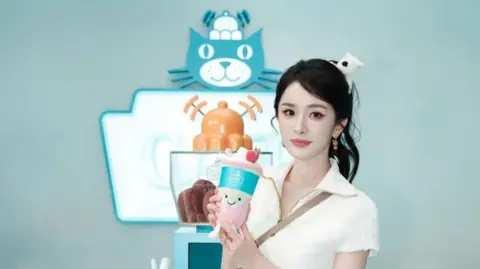
Particularly, items like the eggplant plushie—nicknamed "the boss" in China—have also inspired numerous online jokes, with many expressing grievances about adult life. The "aubergine boss" tag serves as a platform where fans draw various emotive faces on their toy, depicting it in various moods enjoying a drink to forcing a smile.
For example, one Hong Kong-based, Wendy Hui, personalized her aubergine Amuseable by drawing dark circles around its eyes and putting spectacles on it. She then shared an image on a social platform captioning it: "The mood of employees at the start of the week." "I kept working at home even on time off," the 30-something says. "I just wanted to express how exhausted I felt."
In this way, the brand has emerged as an unexpected, whimsical outlet for young Chinese to voice their frustrations about a slowing economy, in which dedicated effort no longer ensure comparable rewards. Amid strict online censorship, the internet have become a crucial, perhaps the primary, space for these types of discussions.
The brand's regular launches of exclusive designs coupled with the retirement of certain lines—an approach often called "hunger marketing" in China—has also fueled {


